Vishal Ma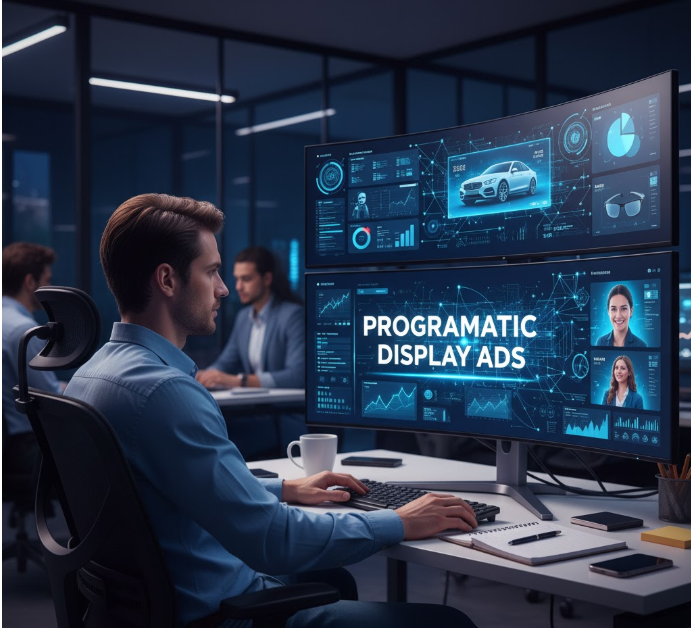
Artificial Intelligence automating ad buying in programmatic advertising
Introduction
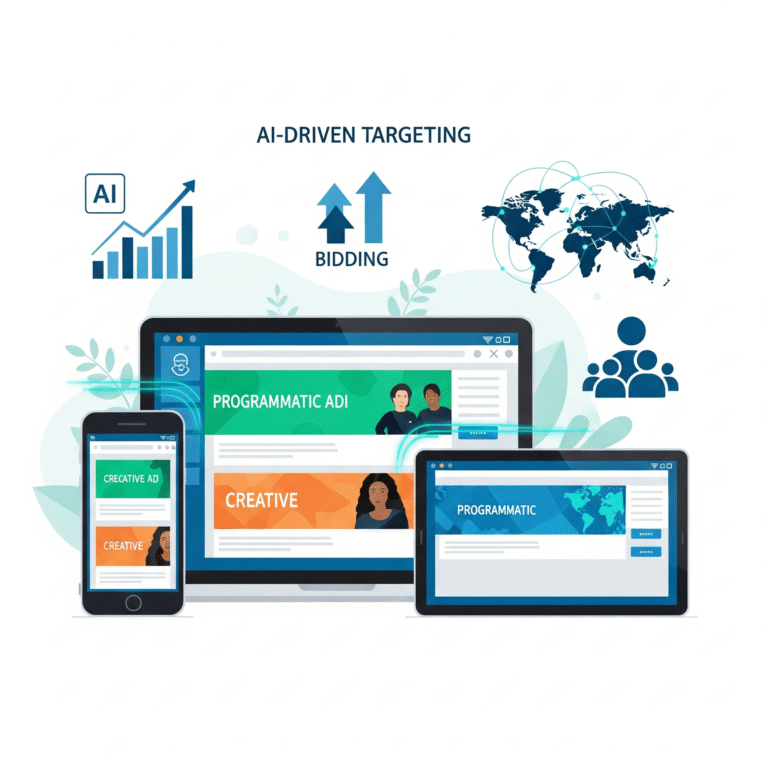
In today’s fast-changing digital world, Programmatic Display Ads have become the backbone of modern advertising. Instead of manually buying ad spaces, marketers now rely on automation and artificial intelligence to deliver personalized ads to the right audience, at the right time, and on the right platform.
Simply put, Programmatic Display Ads use data, algorithms, and real-time bidding to show digital ads automatically — making campaigns faster, smarter, and more effective.
What Are Programmatic Display Ads?
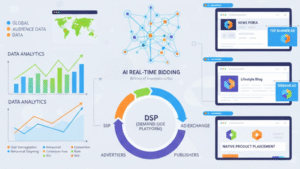
Programmatic Display Ads refer to the automated process of buying and selling online ad space using software instead of traditional human negotiation. It uses AI and machine learning to make instant ad placement decisions.
According to Google Ads Help, programmatic advertising uses automation to buy and sell digital ad space efficiently, giving advertisers more control and better targeting.
When you see a banner ad on a website that perfectly matches your interests, chances are — it’s a programmatic ad. This system analyzes your behavior, location, and browsing activity to decide which ad you should see.
How Do Programmatic Display Ads Work?
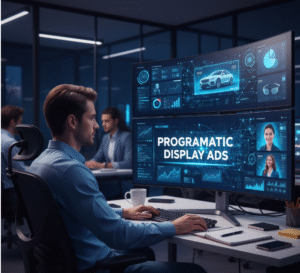
The process behind programmatic advertising happens in milliseconds. Here’s a simplified breakdown:
-
Advertiser Sets Up a Campaign
The advertiser defines the target audience, budget, and ad creatives inside a DSP (Demand-Side Platform) like Google DV360 or The Trade Desk. -
Real-Time Bidding (RTB)
When a user visits a website, an instant auction takes place between multiple advertisers who want to show their ad to that user. -
Highest Bidder Wins
The advertiser with the highest relevant bid wins the auction, and their ad is displayed immediately. -
Data Tracking & Optimization
Platforms like The Trade Desk use real-time bidding (RTB) technology to ensure the most relevant ad is displayed to the right audience within milliseconds.
All this happens in less than a second — faster than a human blink!
Key Components of Programmatic Advertising
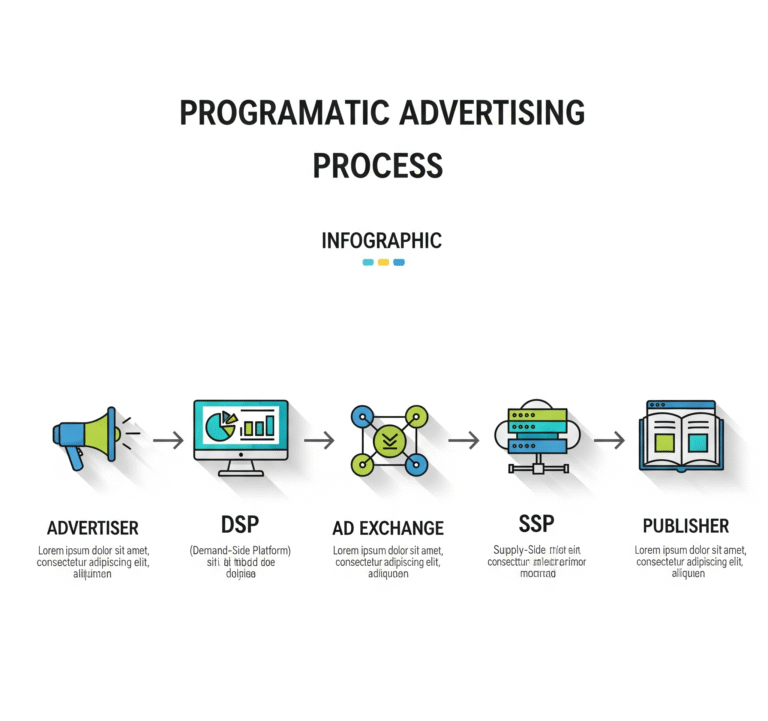
| Component | Description |
|---|---|
| DSP (Demand-Side Platform) | Used by advertisers to buy ad space. Examples: Google DV360, The Trade Desk. |
| SSP (Supply-Side Platform) | Used by publishers to sell their available ad inventory. Examples: PubMatic, OpenX. |
| Ad Exchange | The marketplace where DSPs and SSPs meet and conduct real-time bidding. |
| DMP (Data Management Platform) | Collects and analyzes user data for targeting and segmentation. |
Benefits of Programmatic Display Ads
-
Automation Saves Time
No more manual negotiations or media buying — everything runs automatically. -
Real-Time Optimization
AI continuously adjusts bids, creatives, and placements for the best performance. -
Precise Targeting
Target users based on demographics, behavior, interests, device, and even weather conditions. -
Cost Efficiency
You only pay for impressions that reach relevant audiences, reducing wasted ad spend. -
Cross-Platform Reach
Show ads across websites, mobile apps, OTT, and social media networks seamlessly.
Examples of Programmatic Display Ads in Action
-
E-commerce brands use programmatic ads to retarget users who left items in their shopping cart.
-
Finance companies display loan or credit card offers to users browsing financial content.
-
Gaming and entertainment apps promote new releases using in-app and video display ads.
Each of these campaigns uses data-driven algorithms to make sure the right user sees the right ad at the right time.
Popular Programmatic Advertising Platforms
| Platform | Type | Strength |
|---|---|---|
| Google DV360 | DSP | Deep Google ecosystem integration |
| The Trade Desk | DSP | Advanced AI optimization |
| Adform | DSP + DMP | Unified data and buying |
| PubMatic | SSP | High-quality publisher inventory |
| OpenX | SSP | Transparent and scalable exchange |
Why Programmatic Display Ads Are the Future
As marketing becomes more data-driven, Programmatic Display Ads will dominate digital advertising. They enable brands to reach global audiences efficiently, personalize messages, and optimize campaigns with zero manual effort.
Insights from Think with Google show that programmatic display ads are driving the next wave of personalized and data-driven marketing.
With AI and machine learning improving every day, advertisers will soon be able to predict consumer behavior and deliver hyper-relevant ads — making programmatic not just a trend, but the core of advertising technology.
 Nafeesa parveen