 Nafeesa parveen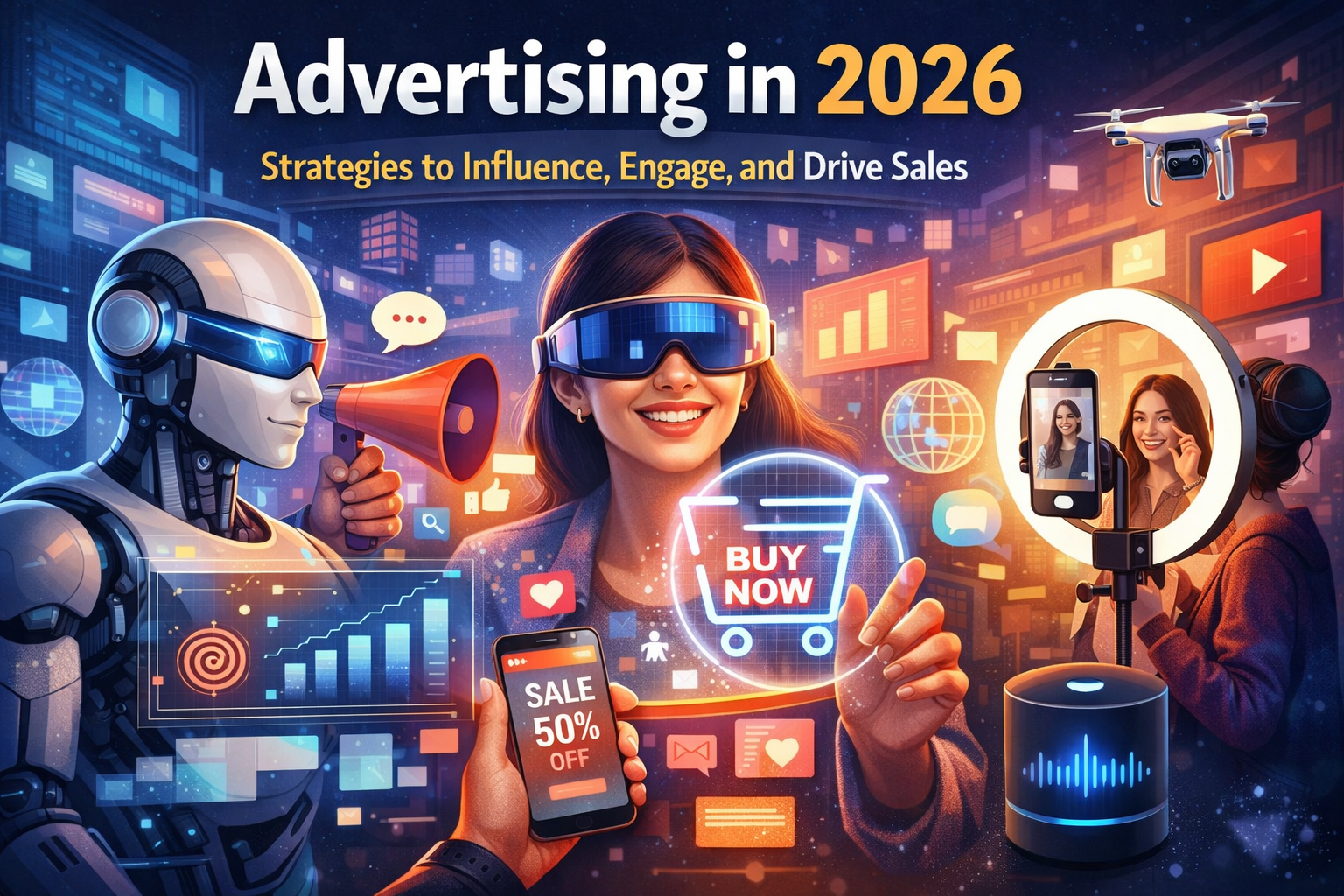
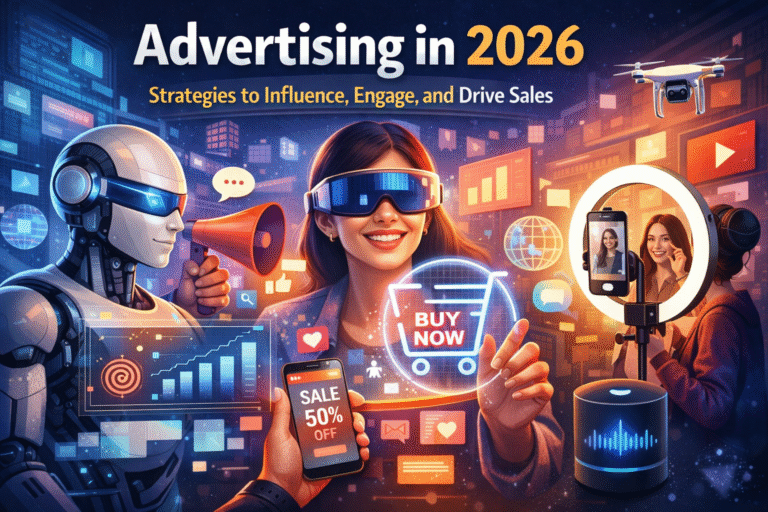
A visual representation of modern advertising in 2026, highlighting AI-driven marketing, influencer content creation, and immersive digital shopping experiences.
Advertising in 2026: Strategies to Influence, Engage, and Drive Sales
Introduction
Advertising in 2026 has evolved far beyond traditional banners, TV commercials, and basic social media promotions. Today, it is a powerful blend of data, creativity, artificial intelligence, and human psychology. Brands are no longer just competing for attention—they are competing for trust, engagement, and long-term relationships.
Consumers in 2026 are smarter, more aware, and more selective than ever before. They expect personalized experiences, authentic messaging, and value-driven communication. This shift has forced businesses to rethink their advertising strategies and adopt a more customer-centric approach.
In this blog, we will explore the most effective advertising strategies in 2026 that help brands influence audiences, boost engagement, and ultimately drive sales.
1. The Evolution of Advertising
Advertising has come a long way from print ads and billboards to hyper-targeted digital campaigns. The biggest transformation has been driven by technology and changing consumer behavior.
In earlier years, advertising was a one-way communication channel. Brands spoke, and consumers listened. But in 2026, advertising is interactive, personalized, and data-driven. Customers actively participate, respond, and even shape brand narratives.
The shift from mass marketing to personalized marketing has made advertising more effective but also more complex. Brands now rely on analytics, automation, and AI to deliver the right message to the right audience at the right time.
2. Role of Artificial Intelligence in Advertising
Artificial Intelligence (AI) is the backbone of modern advertising in 2026. It helps businesses understand customer behavior, predict trends, and optimize campaigns in real time.
AI tools analyze massive amounts of data to identify patterns and preferences. This allows advertisers to create highly targeted campaigns that resonate with specific audience segments.
For example, AI can:
- Recommend products based on browsing history
- Optimize ad placements for better performance
- Generate ad creatives automatically
- Predict customer purchase behavior
AI-driven advertising not only improves efficiency but also increases ROI by reducing wasted ad spend.
3. Personalization is the Key to Success
In 2026, generic ads no longer work. Consumers expect personalized experiences that match their interests, needs, and preferences.
Personalization goes beyond just using a customer’s name. It includes:
- Customized product recommendations
- Location-based offers
- Behavior-driven ads
- Dynamic content tailored to user preferences
When customers feel that a brand understands them, they are more likely to engage and make a purchase. Personalization builds trust and strengthens customer relationships.
4. Data-Driven Advertising Strategies – advertising in 2026
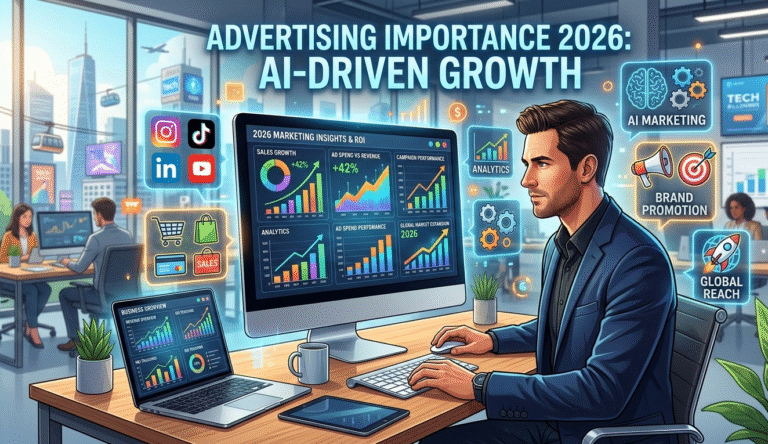
Data is the foundation of successful advertising campaigns. In 2026, businesses rely heavily on data analytics to make informed decisions.
Key data sources include:
- Customer behavior data
- Website analytics
- Social media insights
- Purchase history
By analyzing this data, brands can:
- Identify target audiences
- Measure campaign performance
- Optimize ad strategies
- Improve customer experience
Data-driven advertising ensures that every marketing effort is strategic and results-oriented.
5. Social Media Advertising Dominance – advertising in 2026
Social media platforms continue to dominate the advertising landscape in 2026. Platforms like Instagram, Facebook, YouTube, and short-video apps play a crucial role in brand promotion.
Social media advertising works because it:
- Reaches a massive audience
- Enables precise targeting
- Encourages engagement through likes, comments, and shares
- Supports various formats like reels, stories, and live videos
Brands that create engaging and visually appealing content perform better on social media. Consistency and creativity are key to success.
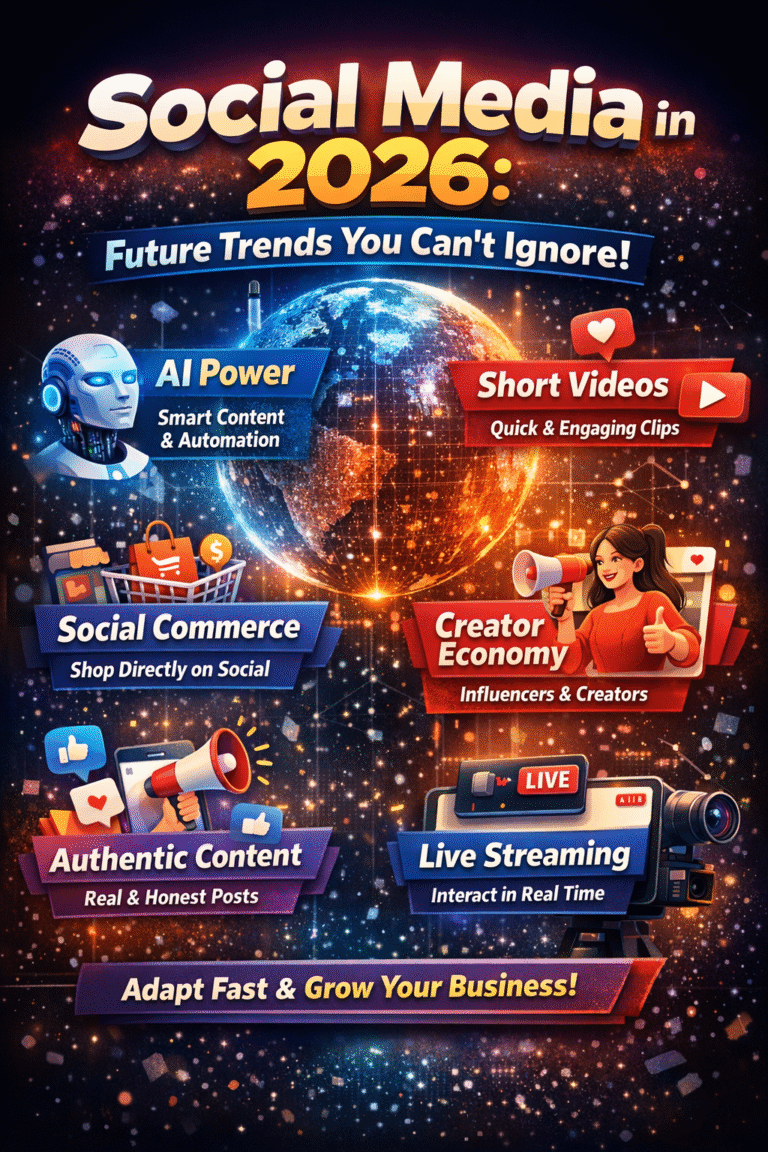
Social Media in 2026: Future Trends You Can’t Ignore
Social media in 2026 is no longer just a platform for entertainment or communication. It has become a powerful tool for business growth, branding, marketing, and online earning.
6. Influencer Marketing in 2026 – advertising in 2026
Influencer marketing has become one of the most powerful advertising strategies. Consumers trust recommendations from influencers more than traditional ads.
In 2026, micro and nano influencers are gaining popularity because they:
- Have a loyal and engaged audience
- Feel more authentic and relatable
- Deliver better conversion rates
Brands collaborate with influencers to promote products in a natural and engaging way. Authenticity is the most important factor in influencer marketing success.
7. Video Advertising is King – advertising in 2026
Video content continues to dominate in 2026. Short-form videos, live streams, and interactive videos are highly effective in capturing attention.
Why video advertising works:
- It is engaging and easy to consume
- It conveys messages quickly
- It creates emotional connections
- It performs well on all platforms
Brands should focus on storytelling through videos to connect with their audience and drive engagement.
8. Voice Search and Smart Devices – advertising in 2026
With the rise of smart devices and voice assistants, voice search advertising is becoming increasingly important.
Consumers use voice commands to search for products, services, and information. This requires brands to optimize their content for voice search by:
- Using natural language keywords
- Answering common questions
- Creating conversational content
Voice-based advertising is expected to grow rapidly in the coming years.
9. Omnichannel Advertising Approach – advertising in 2026
In 2026, customers interact with brands across multiple platforms. An omnichannel approach ensures a seamless experience across all touchpoints.
This includes:
- Website
- Social media
- Email marketing
- Mobile apps
- Offline stores
Consistency in messaging and branding across all channels builds trust and improves customer experience.
10. Emotional and Storytelling-Based Advertising – advertising in 2026
Modern advertising is not just about selling—it’s about storytelling. Brands that connect emotionally with their audience are more successful.
Storytelling helps:
- Build brand identity
- Create memorable experiences
- Establish emotional connections
Consumers are more likely to support brands that align with their values and beliefs.
11. Privacy and Ethical Advertising – advertising in 2026
With increasing concerns about data privacy, ethical advertising has become crucial in 2026.
Consumers expect transparency and control over their data. Brands must:
- Follow data protection regulations
- Be transparent about data usage
- Avoid misleading advertisements
Ethical advertising builds trust and strengthens brand reputation.
12. Performance Marketing and ROI Focus
Businesses are now focusing more on performance-based advertising. Every campaign is measured based on results such as:
- Clicks
- Conversions
- Sales
- Return on investment (ROI)
Performance marketing ensures that businesses get maximum value from their advertising budget.
13. E-commerce and Advertising Integration – advertising in 2026
With the growth of e-commerce, advertising is directly linked to online sales. Platforms now offer integrated shopping features where customers can purchase products directly from ads.
This reduces the customer journey and increases conversion rates.
14. Future Trends in Advertising – advertising in 2026
Looking ahead, advertising will continue to evolve with new technologies such as:
- Augmented Reality (AR) ads
- Virtual Reality (VR) experiences
- AI-generated content
- Interactive ads
Brands that adapt to these trends early will have a competitive advantage.
Conclusion
Advertising in 2026 is a dynamic and ever-evolving field. Success requires a combination of technology, creativity, and strategy. Brands must focus on personalization, data-driven decisions, and customer engagement to stay ahead.
The key to effective advertising is understanding your audience and delivering value through meaningful communication. By adopting modern strategies such as AI-driven campaigns, influencer marketing, video content, and omnichannel approaches, businesses can influence audiences, build strong relationships, and drive sales.
In this competitive landscape, the brands that innovate, adapt, and connect with their audience will lead the future of advertising.
 Vishal Ma