Vishal Ma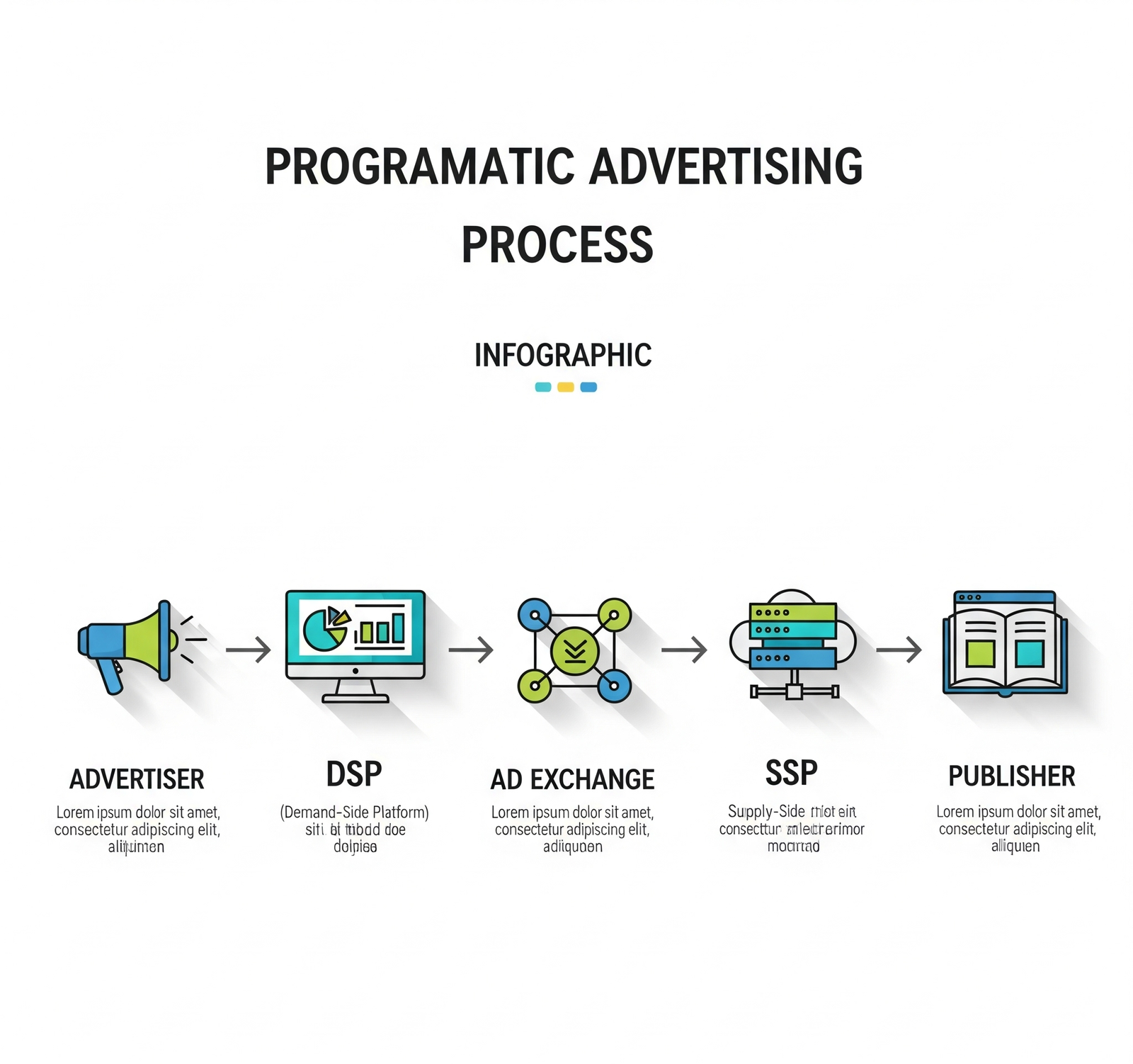
Programmatic ad buying process in 2025
Introduction
What is Programmatic Advertising full details. The digital advertising world has changed dramatically over the past decade. Traditional ad buying—where marketers manually negotiated prices with publishers—has become too slow, expensive, and inefficient for today’s fast-moving online landscape. This is where programmatic advertising comes into play.
But what exactly is programmatic advertising? In simple terms, it’s the use of artificial intelligence (AI), data, and automation to buy and optimize digital ads in real time. Instead of humans negotiating ad placements, machines handle the process in milliseconds, ensuring ads reach the right audience at the right time. buy amozone acoding
Programmatic advertising has already transformed the advertising industry in the US and UK, and it’s rapidly expanding in India, where digital adoption is booming. In this blog, we’ll cover everything you need to know about programmatic advertising in 2025: how it works, its benefits, challenges, types, examples, and future trends.
Programmatic Advertising – google ads
[ez-toc]What is Programmatic Advertising?- What is Programmatic Advertising
Programmatic advertising is the automated buying and selling of online ad space. It uses software, AI, and algorithms to purchase ad inventory instead of relying on human negotiations.
Unlike traditional advertising, which often required back-and-forth communication with publishers, programmatic ads happen in real time, ensuring maximum efficiency.
👉 In short:
-
Traditional advertising = manual, time-consuming, limited targeting.
-
Programmatic advertising = automated, faster, data-driven, highly targeted.
Keyword variation: Programmatic advertising explained → It’s simply automation + AI + data working together to deliver ads efficiently.
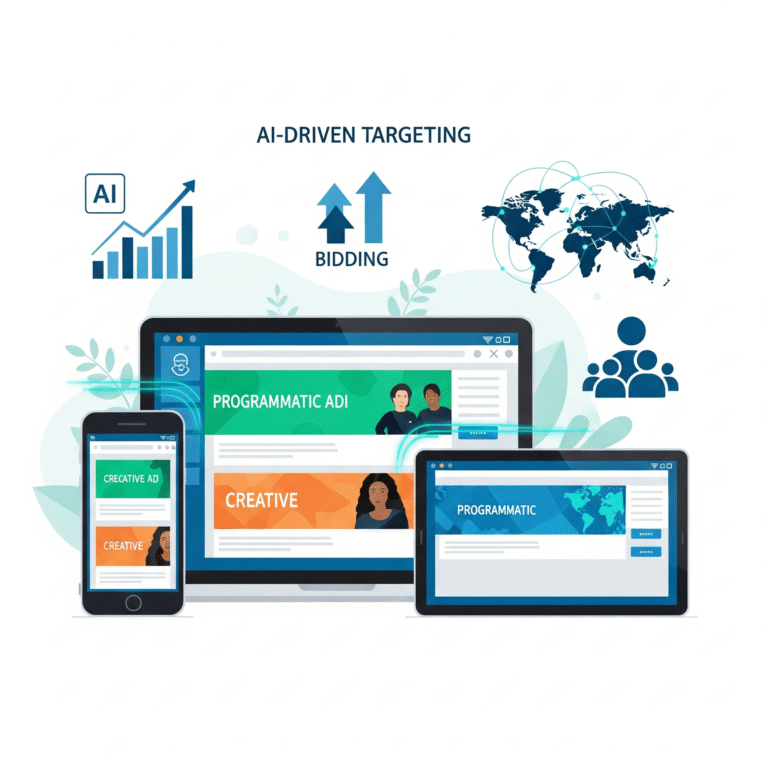
How Programmatic Advertising Works- What is Programmatic Advertising
The programmatic ecosystem may sound complex, but it can be explained in four simple steps:
-
Advertiser sets campaign goals (budget, audience, format).
-
Demand-Side Platform (DSP) analyzes available ad inventory.
-
Ad Exchange connects advertisers with publishers in real time.
-
Supply-Side Platform (SSP) provides publisher’s ad inventory.
The transaction happens through real-time bidding (RTB):
-
Every time a user loads a webpage, ad impressions are auctioned in milliseconds.
-
The highest bidder’s ad is displayed instantly.
Example: If Nike wants to target 18–30-year-old fitness enthusiasts in London, programmatic systems will show ads only to those users who match the criteria—maximizing ROI.
Key Components of Programmatic Advertising- What is Programmatic Advertising
To understand programmatic better, let’s break down its core components:
-
DSP (Demand Side Platform): Tool for advertisers to buy ad space automatically.
-
SSP (Supply Side Platform): Tool for publishers to sell their inventory.
-
Ad Exchange: Marketplace where DSPs and SSPs meet for bidding.
-
Data Management Platform (DMP): Collects and analyzes user data to refine targeting.
-
AI & Machine Learning: Optimize bids, targeting, and ad performance in real time.
Types of Programmatic Advertising -What is Programmatic Advertising

There are different ways advertisers use programmatic ads:
-
Real-Time Bidding (RTB): Open auction where ad space is sold instantly to the highest bidder.
-
Programmatic Direct: Advertisers buy guaranteed impressions directly from publishers using automation.
-
Private Marketplaces (PMPs): Invitation-only auctions with premium publishers.
-
Preferred Deals: Fixed-price deals between advertisers and publishers before inventory goes to auction.
Benefits of Programmatic Advertising
Why are companies shifting towards programmatic ads? Here are the biggest benefits:
-
Automation & Efficiency: No manual negotiations, saving time.
-
Cost-Effectiveness: Optimized bidding ensures best ROI.
-
Advanced Targeting: Demographics, interests, behavior, device, location.
-
Transparency & Tracking: Real-time campaign performance data.
-
Scalability: Easily run global campaigns across the US, UK, and India.
-
Personalization: AI ensures ads are relevant to each user.
Challenges in Programmatic Advertising
Like any technology, programmatic advertising also has challenges:
-
Ad Fraud: Fake clicks or impressions can waste budget.
-
Brand Safety: Risk of ads appearing on inappropriate websites.
-
Privacy Regulations: GDPR (Europe), CCPA (USA), DPDP Bill (India) restrict data usage.
-
Complexity: Requires technical knowledge and monitoring.
Programmatic Advertising vs Traditional Advertising- What is Programmatic Advertising
| Feature | Traditional Advertising | Programmatic Advertising |
|---|---|---|
| Buying Method | Manual Negotiation | Automated (AI + Algorithms) |
| Speed | Days/Weeks | Milliseconds |
| Targeting | Broad Audience | Highly Specific (behavior, interest, location) |
| Cost | Higher due to inefficiency | Lower with optimization |
| Transparency | Limited | Full real-time reporting |
Examples of Programmatic Advertising in Action
-
Coca-Cola: Uses programmatic ads to personalize campaigns across multiple countries.
-
Amazon: Leverages shopping data for hyper-targeted programmatic ads.
-
Nike: Targets fitness enthusiasts across the US, UK, and India using AI-driven programmatic ads.
-
Flipkart (India): Uses programmatic to boost seasonal sales.
These case studies show how global and Indian brands are using programmatic to drive better results.
Future of Programmatic Advertising (2025 & Beyond)- What is Programmatic Advertising
The programmatic ad market is growing at lightning speed. Here’s what’s coming next:
-
AI-Powered Targeting: Smarter, predictive ad placements.
-
Connected TV & OTT Ads: Programmatic ads on Netflix, Disney+, Hotstar.
-
Voice Ads: Integration with smart speakers (Alexa, Google Home).
-
Growth in India: With cheaper data and smartphone penetration, India is becoming a key programmatic market.
Statista predicts programmatic ad spending in the US, UK, and India will grow exponentially by 2030.
FAQs
Q1: What is programmatic advertising in simple terms?
Programmatic advertising is the automated buying and selling of ad space using AI and data.
Q2: Is programmatic advertising expensive?
Not necessarily. It can be cost-effective because it targets only relevant audiences.
Q3: What’s the difference between programmatic and Google Ads?
Google Ads is a platform. Programmatic is a broader ecosystem covering multiple DSPs, SSPs, and ad exchanges.
Q4: Is programmatic suitable for small businesses?
Yes. Even small brands in the US, UK, and India can run localized campaigns.
Conclusion
Programmatic advertising has revolutionized how brands connect with their audiences. By leveraging automation, AI, and real-time data, businesses can achieve better efficiency, targeting, and ROI compared to traditional ad buying.


 Nafeesa parveen